How can MSG help with the new ISO 14001 Standard?

Introduction: Why ISO 14001 Was Revised in 2026

The fourth edition of ISO 14001 (ISO 14001:2026) was officially published on April 15, 2026. At Management Solutions Group (MSG), we have been closely monitoring this revision to help our clients transition smoothly while strengthening their Environmental Management Systems.

The new revision of ISO 14001: 2026 may not require organizations that have high functioning environmental management systems to make any changes to comply.

A good idea would be to revise the policy manual to be laid out explicitly like the new standard so that all verbiage, numbering and other minor changes are explicitly addressed.

The changes identified below fall into two main groups,

  1. There are some minor additional specifics,
  2. Other changes have the intent of strengthening certain requirements.
Bottom line: If your organization is already certified to ISO 14001:2015, you have approximately three years (until April/May 2029) to transition. Our team at MSG is ready to make this process straightforward and value-adding for your business.

Need help transitioning to ISO 14001:2026?

The new ISO 14001:2026 – What You Need to Do to Maintain Conformance

A comprehensive guide to the 2026 revision of the world’s leading Environmental Management System standard


Introduction: Why ISO 14001 Was Revised in 2026

The fourth edition of ISO 14001 (ISO 14001:2026) was officially published on April 15, 2026, replacing ISO 14001:2015. After more than a decade, the revision reflects evolving global environmental priorities while keeping the proven Annex SL structure intact.

The new revision of ISO 14001: 2026 may not require organizations that have high functioning environmental management systems to make any changes to comply.

A good idea would be to revise the policy manual to be laid out explicitly like the new standard so that all verbiage, numbering and other minor changes are explicitly addressed.

The changes identified below fall into two main groups,

  1. There are some minor additional specifics,
  2. Other changes have the intent of strengthening certain requirements.
Bottom line: If your organization is already certified to ISO 14001:2015, you have approximately three years (until April/May 2029) to transition while maintaining conformance.

Cost for ISO 14001:2026 Certification

man and tree in the wilderness concept of environmentalHere's a clear and realistic breakdown of the cost to get ISO 14001 (Environmental Management System) certified by an accredited registrar.

Total Cost Range for Accredited ISO 14001 Certification (USA)

Costs vary widely depending on your company size, complexity, number of locations, and whether you use a consultant.

Are you ready for ISO 14001:2026?

While we prepare for the release of ISO 14001:2026 next January, businesses can still implement and be certified to ISO 14001:2015 until at least June 2027. After the final version is released in Q1 2026, during the early-phase transition period; we will update our customers with the documentation they need to revise their environmental management system.

ISO 14001:2026 change and action summary

Start your ISO 14001:2026 transition planning early by reviewing our change and action summary to help you avoid disruption and maintain certification. The ISO 14001:2026 update will focus on clarifications and alignment rather than sweeping new requirements.

Clause 4 Context of the Organization

Change summary: The revision places a greater focus on how external environmental factors, such as climate change, biodiversity, and resource availability, both affect the organization and are affected by its operations.
This includes considering aspects like greenhouse gas emissions and climate action more explicitly within the EMS. This reflects the growing global imperative to address critical ecological issues.

How can an ISO 14001 certificate help an organization?

14001 cartoonManagement Solutions Group have expert consultants in Environmental Management Systems.  An ISO 14001 certificate, which recognizes adherence to the ISO 14001 Environmental Management System (EMS) standards, can significantly benefit an organization in several ways:
  1. Enhanced Environmental Performance: ISO 14001 provides a framework for managing and continually improving an organization's environmental impact. This includes efficient use of resources, reduction of waste, and mitigation of environmental risks.

  2. Compliance with Legal Requirements: The certification ensures that an organization is aware of and compliant with relevant environmental laws and regulations. This compliance not only avoids legal penalties but also enhances the organization's reputation.

  3. Cost Savings: By implementing more efficient resource use and waste management strategies, organizations can achieve significant cost reductions. Energy savings and waste minimization often lead to direct financial benefits.

  4. Improved Stakeholder and Customer Trust: Holding an ISO 14001 certificate demonstrates a commitment to environmental responsibility, which can enhance the organization's image and credibility. This is increasingly important to customers, investors, and other stakeholders who are conscious of environmental issues.

  5. Competitive Advantage: In many industries, having an ISO 14001 certification can be a differentiator in the marketplace. It can be particularly beneficial when tendering for new business, especially with clients and sectors that prioritize environmental management.

  6. Risk Management: The standard helps organizations identify, manage, and control environmental issues in a systematic and consistent way, reducing the risk of non-compliance and environmental accidents.

Universal Wastes for Michigan

Environmental and Safety – Universal Wastes for Michigan – Now Includes Aerosol Cans


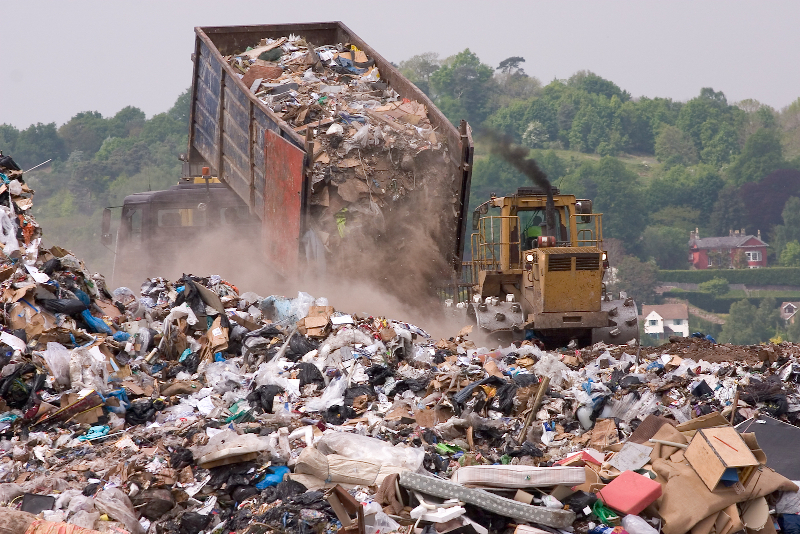
A bulldozer moving garbage on a landfill waste site as a garbage truck dumps moreMichigan has adopted the Federal EPA Final Rule that added hazardous waste aerosol cans to the federal universal waste list. Many other states have as well, so if you are outside of Michigan, you will want to check your state requirements for this. The new requirements allow a company to dispose of empty and non-empty aerosol cans as universal waste instead of hazardous waste.

If you currently puncture your aerosol cans and recycle the empty can, this is also an accepted practices and you can continue to do this if you like.

For organizations that only have a few aerosol cans or no puncture system, this newer rule can allow for a disposal option that is less onerous and potential lest costly that disposing of non-empty aerosols as hazardous waste. Additionally, any universal waste aerosol cans would not count towards the organizations’ hazardous waste quantity.

There are specific labelling and storage requirements for Aerosol cans disposed of as universal waste and good guidance is provided in the Michigan Guide linked below.

Also be sure to check with your waste hauler to see if they have any specific options or requirements for disposal as well.

Link to a guide for Michigan.

What is an EMS or ISO 14001 System?

ISO 14001 Man Holding Grass Covered CableMany people immediately think of toxic waste and major pollution sites when they hear of an Environmental Management System (EMS) or ISO 14001. While these items would fall under an EMS, the actual scope is much broader and will affect almost everyone who works within a company with an EMS that meets the ISO 14001 requirements.

What is ISO 14001?

ISO 14001 was released in 1996 with the intent that companies manage all of the activities, products and services that can significantly impact the environment. The Standard has three basic objectives of continuous improvement, regulatory compliance and pollution prevention. The standard is broken into 5 main sections: Environmental Policy, Planning, Implementation & Operation, Checking and Corrective Action, and Management Review. To implement an ISO 14001 conforming EMS a company will have to write and implement approximately 6 new procedures and modify approximately 9 existing procedures (Assuming the company is currently ISO 9000 compliant)